
Car sales have skyrocketed recently, and automotive companies are projecting even higher revenues for the coming years. This surge in sales often creates a subtle but powerful social pressure. Whether you are at a family gathering or catching up with colleagues, the conversation inevitably turns to the latest models. You might feel an internal push to trade in your reliable old vehicle for something shiny and new.
However, once you begin researching market rates and installments, reality hits: cars have become significantly more expensive. For most people, buying a vehicle with a lump sum of cash is no longer a viable option. This is where car financing enters the picture. While it is the most popular way to get behind the wheel, it is also a path filled with potential financial traps if you aren’t properly informed.
In this comprehensive guide, we will break down the mechanics of car financing, the differences between banking models, and how to determine if you can truly afford that new ride without compromising your quality of life.
Also read car-on-installment-in-pakistan-2025.png
What is Car Financing and How Does It Work?
At its core, car financing is a contract between you and a financial institution. Instead of paying the full price upfront, the bank pays the dealership on your behalf. You provide a portion of the cost—known as the down payment—and the bank covers the rest.
You then enter a term, typically ranging from three to five years, during which you repay the bank in monthly installments. These installments include the principal amount plus the bank’s profit or interest. Once the final payment is made at the end of the term, the vehicle’s title is fully transferred to your name. This system allows you to manage your cash flow without a massive “lump sum” drain on your savings.
Step 1: Choosing Your Path — Islamic vs. Conventional Financing
The first major decision you face is selecting the type of banking system. Generally, you have two primary options: Conventional Banking and Islamic Financing.
Why Many Prefer Islamic Financing
Islamic financing is often preferred because it is based on asset-backed trading or leasing (Ijarah) rather than a simple money-lending interest model. Major institutions like Meezan Bank and Bank Islami specialize in this, but even conventional banks like HBL often have dedicated Islamic departments.
Expert Tip: When visiting a bank, always clarify which department you are speaking to. Even within a conventional bank, you must explicitly ask for the Islamic financing desk to ensure the contract meets those specific regulatory and ethical standards.
Step 2: Shopping for the Best Deal
Don’t settle for the first quote you receive. To get the best deal, you must be proactive.
- Visit Multiple Banks: Go to at least three different institutions.
- Request Formal Quotations: Ask for a printed breakdown for your desired vehicle. This page should clearly state the down payment, the monthly installment for each year, and any hidden processing fees.
- Check for “Balloon Payment” Options: This is a crucial feature. A balloon payment allows you to pay a large sum (e.g., 300,000 to 500,000) at once to significantly reduce your future monthly installments. Some banks allow this without penalties, while others trap you in a rigid plan. Always prioritize banks that offer this flexibility.
Step 3: Fixed vs. Flexible Rates — Avoiding the 2021 Mistake
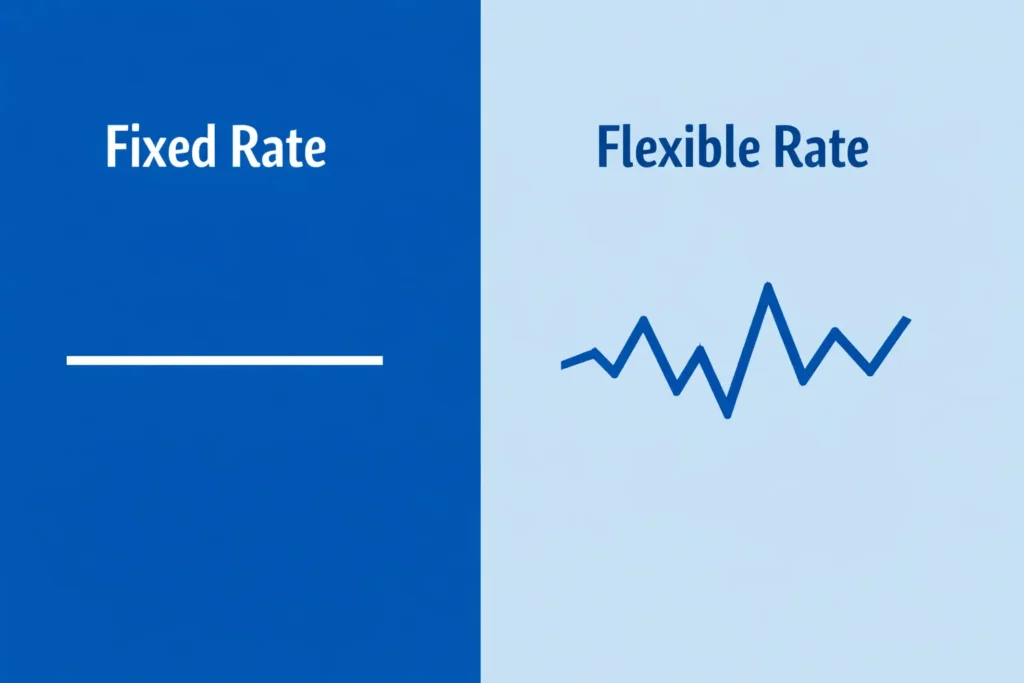
One of the most expensive mistakes you can make is choosing the wrong rate type. In 2021, many buyers opted for flexible (variable) rates when interest rates were at a historic low. As the economy shifted and interest rates climbed, their installments doubled within months, leading to immense financial stress.
The 2026 Outlook
Currently, interest rates are near a potential bottom. If you finance a car today, it is highly recommended to secure a Fixed Rate. A fixed rate ensures your installment stays the same regardless of economic volatility. If you choose a flexible rate now and the economy faces inflation in two years, you could find yourself stuck in a loop of rising payments that you can no longer afford.
The “Salary Slip” Strategy: Improving Your Approval Odds
Banks are in the business of risk evaluation. They want to ensure that you have the “repayment capacity” to honor the loan. If your income is heavily based on commissions or fluctuations, you might face rejection—even if your total take-home pay is high.
How to Structure Your Documentation
Many people are rejected because their “basic salary” appears too low on paper. If you are a high earner with a complex pay structure, talk to your employer about how your salary slip is formatted. Breaking down your income into Basic Salary, House Allowance, and Travel Allowance provides a clearer, more stable picture for the bank’s risk assessment team. This small adjustment in documentation can be the difference between an approval and a rejection.
Can You Truly Afford a Financed Car?
This is the most technical part of the journey. In Western markets, experts like Dave Ramsey or Graham Stephan suggest that your car installment should be between 15% and 20% of your income. However, in many markets today, even the cheapest cars have installments that exceed 30% of a standard professional salary.
The “Economic Detective” Rule
To decide if you should finance, you need to become an “economic detective.” You don’t need a PhD, but you should have a basic understanding of:
- Trade Imbalances: Is the country importing more than it exports?
- Currency Depreciation: Is your local currency losing value against the dollar?
- Inflation Cycles: Where do we stand in the current interest rate cycle?
If you take a loan on a depreciating asset (like a car) during a period of high inflation, you lose twice: once on the car’s value and once on the high interest you pay.
The Five-Year Life Test
Before signing the contract, visualize your life five years from now.
- Will you be married?
- Will you have children and school fees to pay?
- Is your income projected to grow faster than your expenses?
If your current installment is 45,000, can you still afford that same 45,000 in three years when your grocery and utility bills have likely doubled? If the answer is “no,” you are better off driving a motorcycle or an older car than living with the anxiety of a debt you can’t sustain.
The Debate: Cash vs. Financing for Investment

There is a growing trend suggesting that even if you have the cash to buy a car, you shouldn’t. The argument is to pay a small down payment, finance the rest, and invest the remaining cash to “earn” your installment.
When This Strategy Works
This is an excellent strategy for high-level investors who know how to time the market and book profits. If you can earn 25% on an investment while your car loan costs you 15%, you are effectively making a profit.
When to Avoid It
If you value Peace of Mind over marginal gains, buy with cash. Investments can go down, but your bank installment is a legal obligation that never stops. For most people, owning the asset outright is the safest path to financial freedom.
Summary Checklist for First-Time Buyers
| Step | Action Item | Why It Matters |
| 1 | Choose Islamic Financing | Asset-backed and transparent contracts. |
| 2 | Get 3+ Quotations | Ensures you aren’t overpaying on the base rate. |
| 3 | Demand a Fixed Rate | Protects you from future economic inflation. |
| 4 | Confirm Balloon Payments | Allows you to clear debt faster if you get a bonus. |
| 5 | Apply the 5-Year Test | Ensures the car doesn’t ruin your future quality of life. |
FAQs
1. Can I finance a used car or only new ones?
Most banks offer financing for both. However, for used cars, the vehicle usually cannot be older than 5 to 7 years at the time the financing term ends. The interest rates for used cars are also typically slightly higher than for brand-new models.
2. What happens if I miss an installment?
Missing an installment leads to late payment penalties. If you miss multiple payments, the bank has the legal right to repossess the vehicle. Always ensure you have an “emergency fund” covering at least three months of installments.
3. Is insurance mandatory in car financing?
Yes. Banks require the car to be fully insured (Comprehensive Insurance) throughout the financing term. This protects the bank’s investment in case of theft or a total-loss accident.
4. Can I sell the car before the financing term ends?
Yes, but you must first “settle” the loan with the bank. You can either pay the remaining balance yourself or find a buyer whose payment clears your debt at the bank so the title can be released.
5. Does car financing affect my credit score?
Absolutely. Timely payments will build a strong credit history, making it easier for you to get home loans or business financing in the future. Conversely, defaults will make you “unbankable” for years.
Conclusion: Drive Within Your Means
Financing a car is a major milestone, but it should never be an emotional decision based on social pressure. By choosing the right banking model, securing a fixed rate, and passing the “Five-Year Life Test,” you can enjoy the convenience of a new vehicle without the crushing weight of unsustainable debt.
Be the “economic detective” of your own life. Research the rates, play with a finance calculator, and only commit when the numbers make sense for your long-term future. https://www.calculator.net/finance-calculator.html