
The transport landscape in Punjab is undergoing a massive digital transformation.
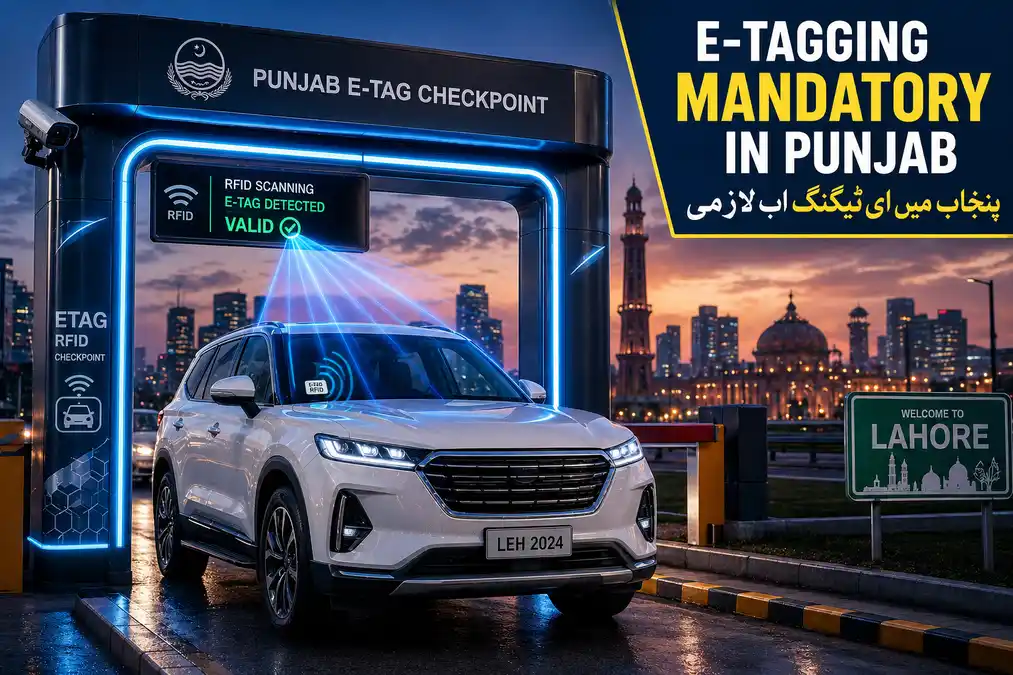
In a high-level security meeting held in April 2026, Chief Minister Maryam Nawaz Sharif officially approved and mandated the E-Tagging of all vehicles and motorcycles across the province. This initiative is not just a digital upgrade; it is a core component of the Punjab Government’s broader “Smart Surveillance and Crime Prevention” strategy.
If you own a vehicle in Lahore, Faisalabad, Multan, or any part of Punjab, you are now legally required to equip your vehicle with an Electronic Tag (E-Tag). At Zebialerts, we have compiled the most comprehensive, up-to-date guide to help you navigate this new law without facing heavy fines.
1. What is E-Tagging and Why is it Now Mandatory?
E-Tagging is an RFID-based (Radio Frequency Identification) digital identification system. A small, non-transferable electronic chip is installed on the vehicle’s windshield or front cowl (for motorcycles).
Why the Change in 2026?
According to official briefings, the 2026 mandate was triggered by the need for:
- Real-time Tracking: Integration with the Safe City Authority camera network to track vehicles involved in criminal activities.
- Theft Prevention: Digital tags make it nearly impossible for stolen vehicles to pass provincial borders or enter high-security zones.
- Automated Fining: Eliminating manual paper challans. The system can automatically detect vehicles without tags and issue e-challans to the registered owner’s address.
2. E-Tagging Punjab 2026: Official Fee Structure
The Punjab government has kept the fee structure relatively affordable to ensure maximum compliance.
| Vehicle Type | One-Time Registration Fee | Annual Renewal Fee |
| Motorcycles & Scooters | Rs. 500 | Rs. 100 |
| Private Cars (up to 1000cc) | Rs. 1,500 | Rs. 300 |
| Sedans & SUVs (>1000cc) | Rs. 3,000 | Rs. 500 |
| Commercial Trucks/Buses | Rs. 5,500 | Rs. 1,000 |
3. Step-by-Step Guide: How to Apply for E-Tagging Online
To avoid long queues at Excise offices, the government has integrated E-Tagging with the e-Pay Punjab application and the M-Tag One Network.https://excise.punjab.gov.pk/
Step 1: Digital Verification
Download the e-Pay Punjab app or visit the Excise, Taxation & Narcotics Control Department website. Enter your vehicle registration number and CNIC to verify ownership.
Step 2: Fee Payment
Generate a PSID for your E-Tag. You can pay via:
- Digital Banks: SadaPay or NayaPay.
- Mobile Wallets: JazzCash or EasyPaisa.
- Internet Banking: Any commercial bank app.
Step 3: Tag Collection & Installation
Once the payment is verified, visit the nearest E-Tagging Center (located at motorway toll plazas and major Excise offices). A technician will scan your digital receipt and professionally install the RFID tag on your vehicle.
Pro Tip for Discover: Make sure your vehicle’s physical number plates match the digital record in the DLIMS Punjab database before applying, or your E-Tag application might be rejected!
4. New Traffic Fines for Non-Compliance (April 2026 Update)
The Punjab Traffic Police has been directed to enforce these rules strictly. If your vehicle is found on the road without an active E-Tag after the May 2026 deadline, the following fines will apply:
Updated Fine List 2026
- Missing/Damaged E-Tag (Cars): Rs. 5,000
- Missing/Damaged E-Tag (Bikes): Rs. 2,000
- Tampering with E-Tag: Up to Rs. 25,000 and vehicle impoundment.
- Expired Tag Validity: Rs. 1,000 per week.
5. Benefits of E-Tagging for the Common Citizen
While it might seem like another administrative task, E-Tagging offers several direct benefits:
- Fast-Track Tolls: No more waiting at toll plazas. The tag acts like an M-Tag for seamless city entry/exit.
- Increased Resale Value: A “Digital-Ready” vehicle with a clean E-Tag history sells faster in the used car market.
- Security Guarantee: If your vehicle is stolen, the E-Tag allows police to trigger a province-wide “Lockdown” on that specific ID.
Buying a new car soon? Check out the [MG HS 2nd Generation Launched in Pakistan: Price, New Specs & Booking Details (April 2026)] to see if it comes with factory-fitted E-Tagging!
Frequently Asked Questions (FAQs)
Q1: Is E-Tagging different from M-Tag?
Yes. While both use RFID, M-Tag is primarily for Motorway tolling. E-Tagging is a provincial security requirement for all city roads and highways.
Q2: Can I transfer my E-Tag to another car?
No. E-Tags are designed to break if tampered with or removed. If you sell your car, the new owner must update the registration under their name.
Q3: What if my windscreen breaks?
You must report it to the Excise department immediately. A replacement tag will be issued at a nominal cost of Rs. 500 after verifying the FIR or insurance claim.
Final Verdict
The E-Tagging Punjab 2026 initiative is a mandatory step toward a safer Pakistan. By registering your vehicle today, you not only avoid heavy fines but also contribute to a digitally secure province. Stay updated with Zebialerts for more news on Punjab government schemes and automotive updates.